Why subtype Parkinson's disease?
Parkinson's disease is not one disease. Two patients with the same diagnosis can follow radically different courses — one stable for a decade, another in a wheelchair with dementia within five years. Trials that treat PD as a single entity dilute their strongest signals in slow progressors, and disease-modifying candidates keep failing.
The effort advances on two independent fronts. The first takes the existing data-driven DM/IM/MMP framework (originally proposed by Fereshtehnejad and colleagues) and makes it clinically deployable — establishing that it predicts progression better than the clinical and pathological models it is benchmarked against, mapping its genetic architecture, and re-engineering its thresholds so it can be applied prospectively, mid-course, in real time, then shipped as an open calculator. The second is a distinct line establishing new imaging subtypes defined by cholinergic degeneration — beginning with PD–MCI marked by nucleus basalis (Ch4) atrophy, a more malignant group defined not by clinical scores but by brain structure, with further cholinergic subtypes under active study.
Two research lines.
1 · Data-driven Subtypes — take the DM/IM/MMP framework, prove it predicts progression, explain its biology, and make it usable prospectively with disease-duration percentiles and a free calculator.
2 · Cholinergic Subtypes — establish imaging subtypes defined by cholinergic degeneration, beginning with PD–MCI marked by Ch4 atrophy as a distinct, faster-progressing group.
Making the DM/IM/MMP model work in real time
The data-driven model of Fereshtehnejad and colleagues has prognostic value but wasn't ready for prospective use. A line of studies closes that gap — does it predict progression, what is its biology, and can it be applied at any disease duration?
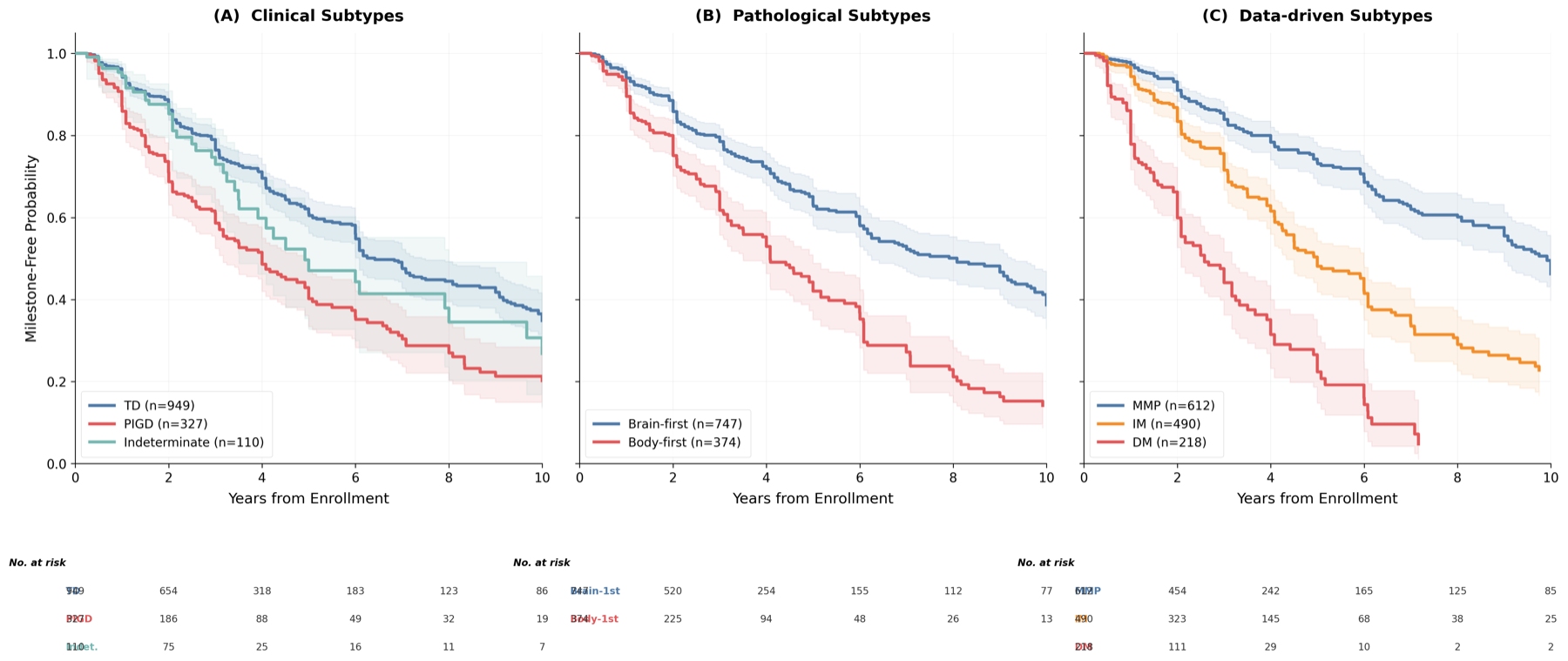
Which PD subtyping framework better captures individuals who progress faster?
If subtyping is going to matter for trials, one framework has to actually beat the others at flagging rapid progressors. So all three were put head-to-head over ten years of PPMI follow-up: the classic clinical motor split (tremor-dominant vs. postural-instability/gait-difficulty vs. indeterminate), the pathological brain-first vs. body-first model, and the data-driven DM/IM/MMP model — scored against 25 predefined milestones spanning six functional domains.
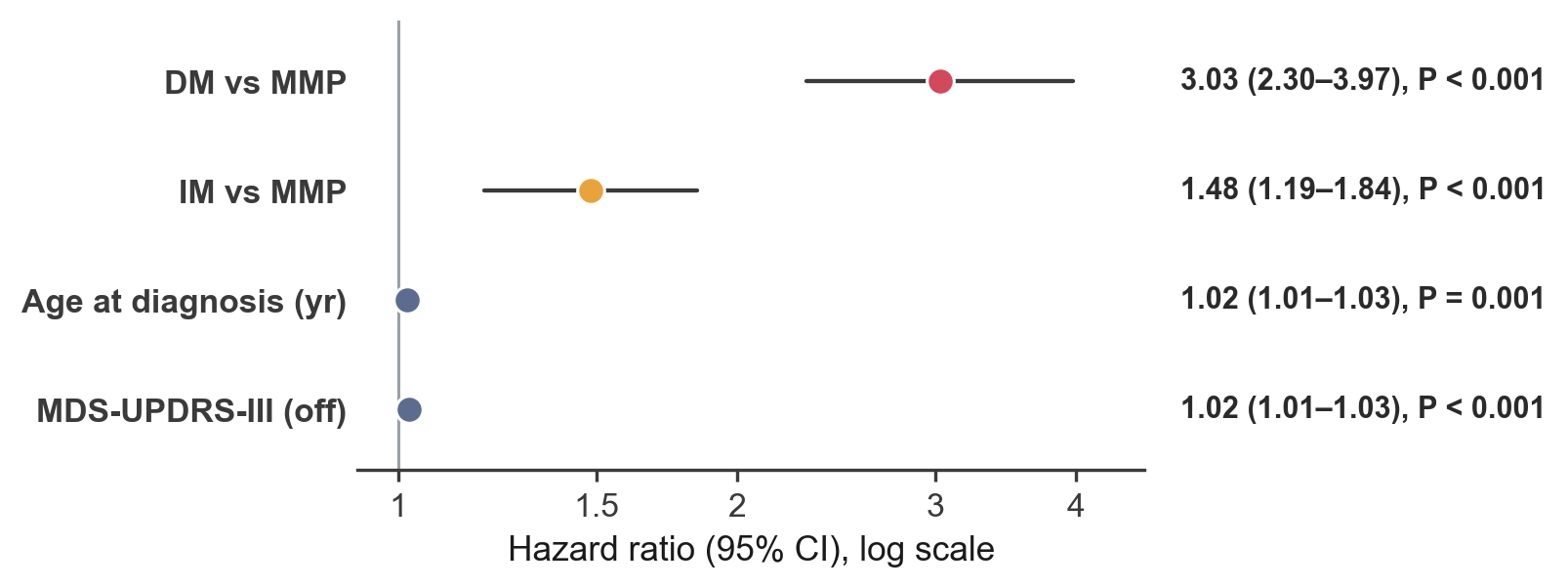
The data-driven model won. Diffuse-malignant patients reached the most milestones and carried the highest hazard of progression after adjustment for age. The clinical payoff is concrete: trial simulations showed that enrolling DM patients could cut required sample sizes by roughly half at standard trial durations versus unstratified cohorts — a direct lever on the feasibility of disease-modification trials.
What are the genetic correlates underlying existing PD subtyping frameworks?
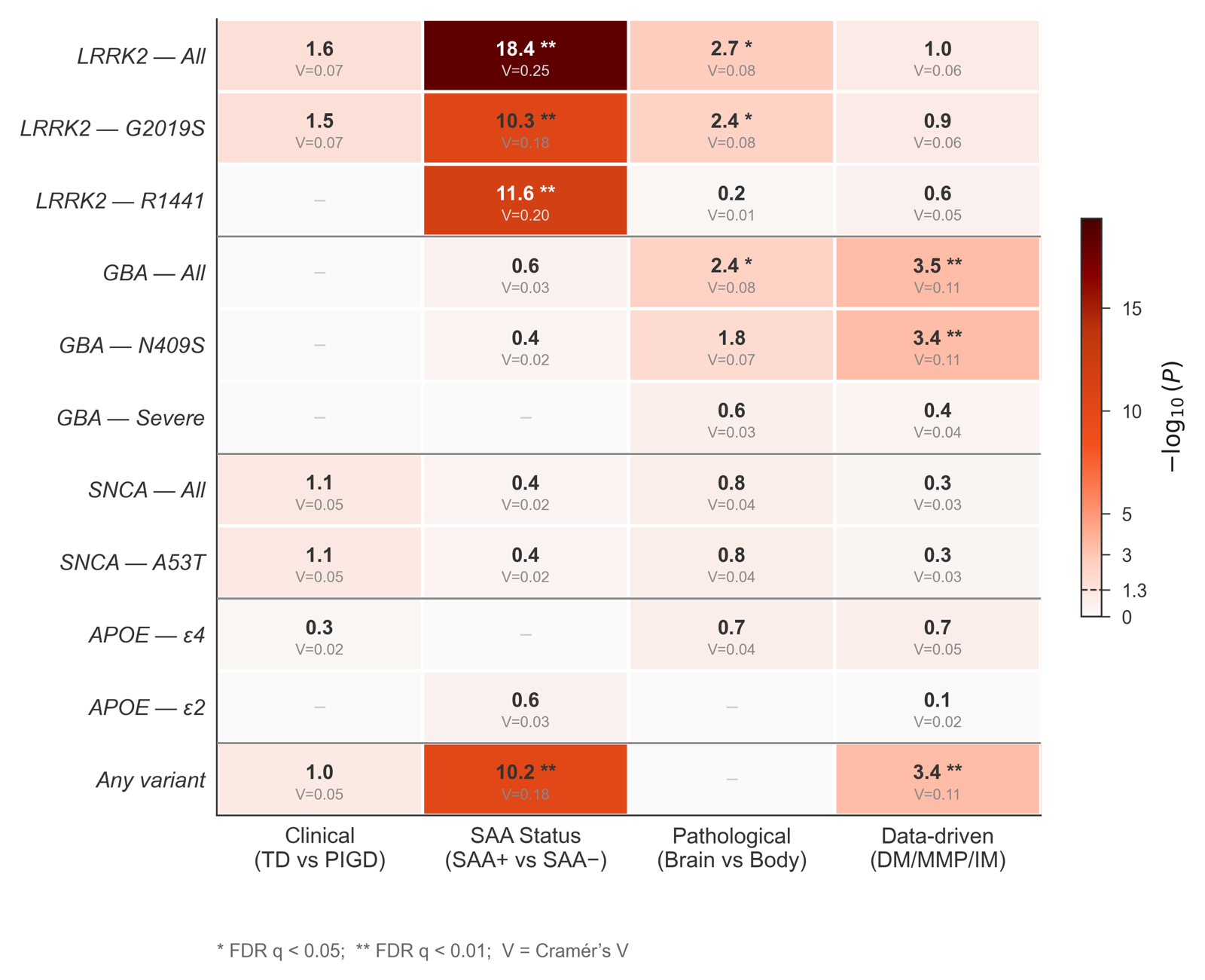
A subtype worth stratifying on should have biology behind it, not just statistics. Across 1,390 PPMI patients genotyped for seven PD-associated genes, the question was which subtyping frameworks map onto genetic architecture. The clinical tremor/gait split showed no genetic signal that survived multiple-comparison correction. The biologically grounded frameworks did: LRRK2 variants were strongly enriched among α-synuclein seed-amplification–negative patients (Cramér's V = 0.25), and GBA1 variants tracked the body-first and diffuse-malignant subtypes.
The message: the data-driven and pathological subtypes carve PD along lines that genetics recognizes — the clinical motor labels largely do not.
What criteria can identify DM-PD in real time for screening and recruitment in clinical trials?
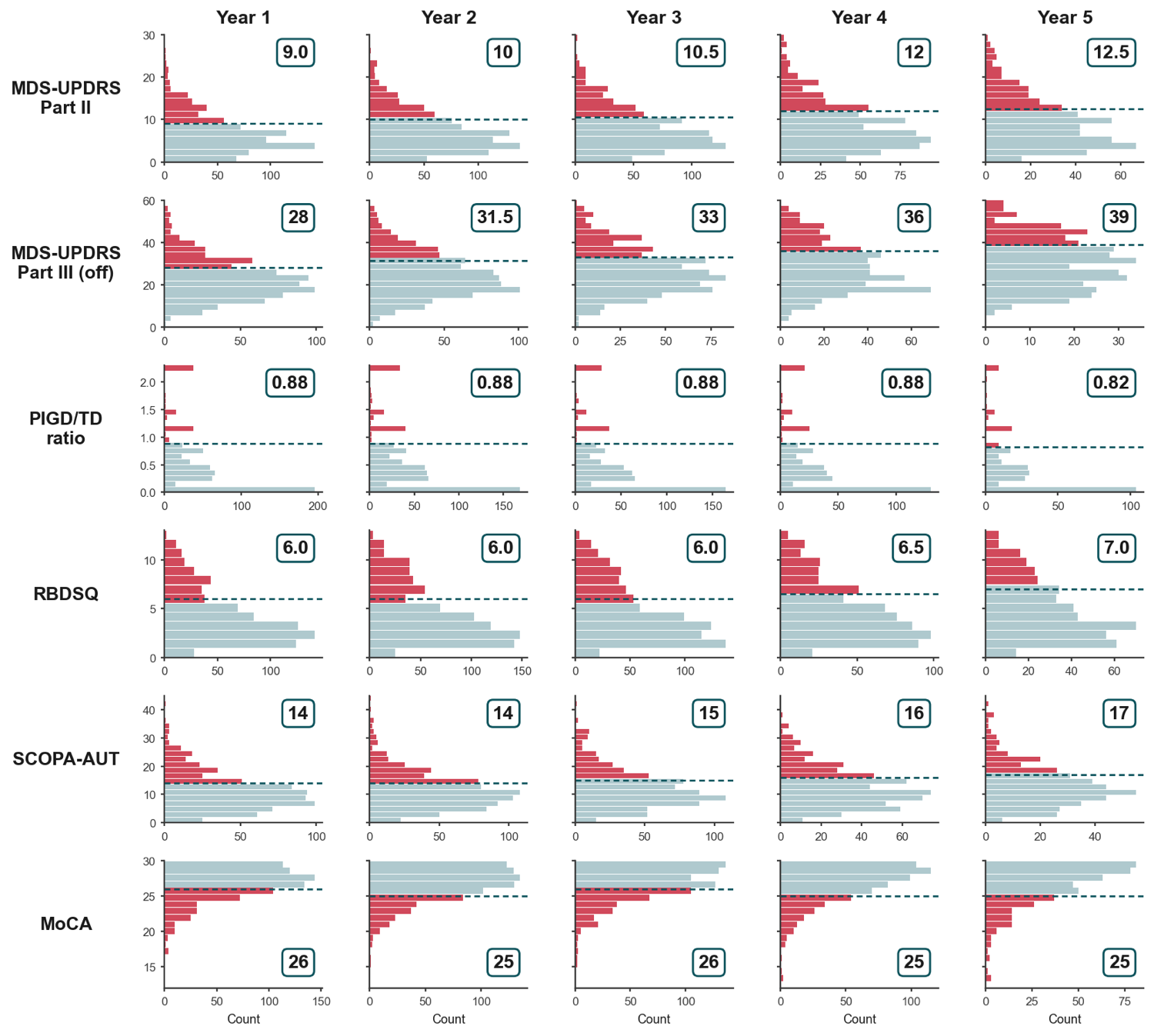
The original data-driven model had a practical flaw: it used fixed baseline thresholds. That works if you have a drug-naive patient at diagnosis — but it cannot classify the patient sitting in clinic three years in, whose scores have already drifted with the disease. To subtype prospectively, the yardstick has to move with disease duration.
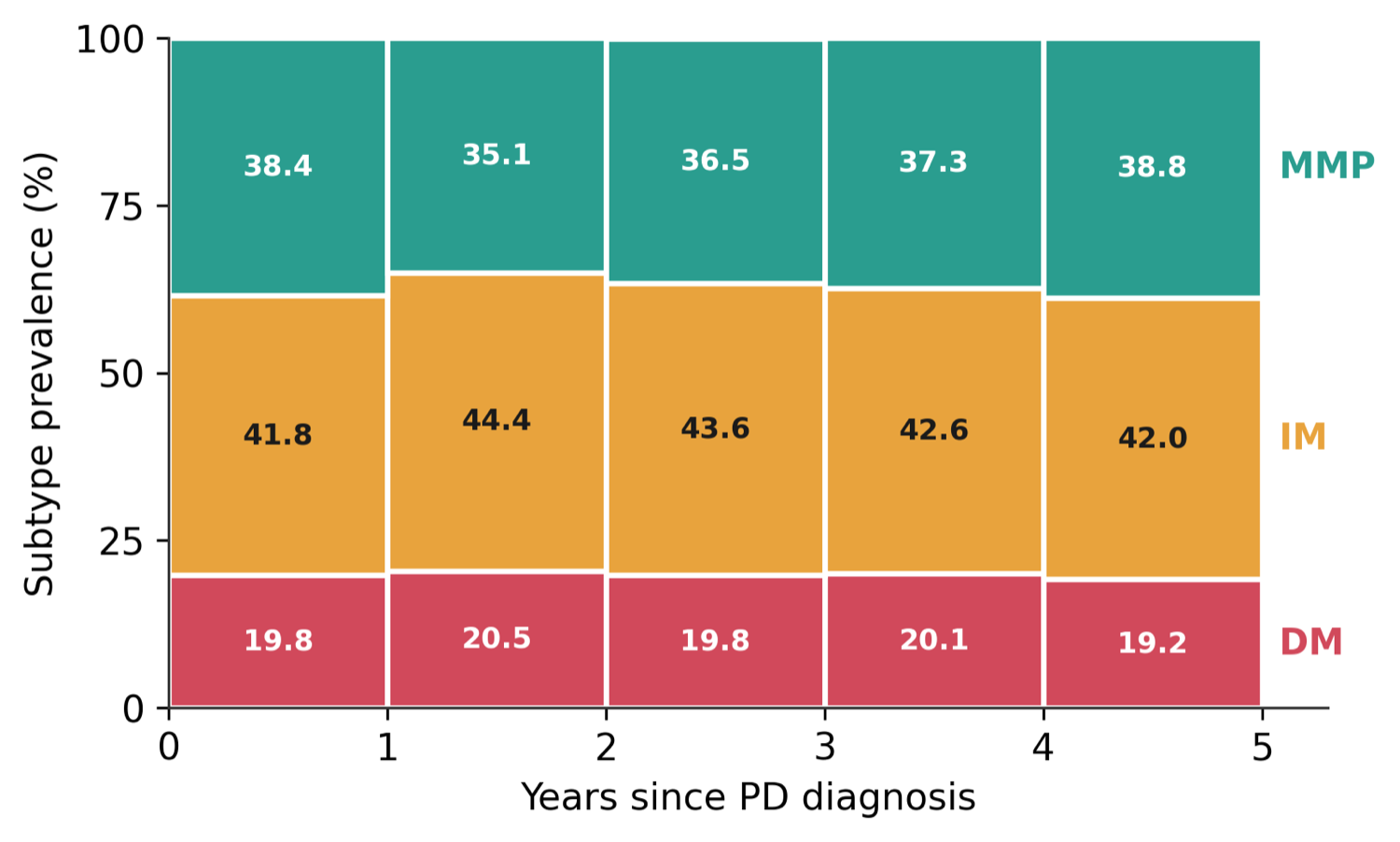
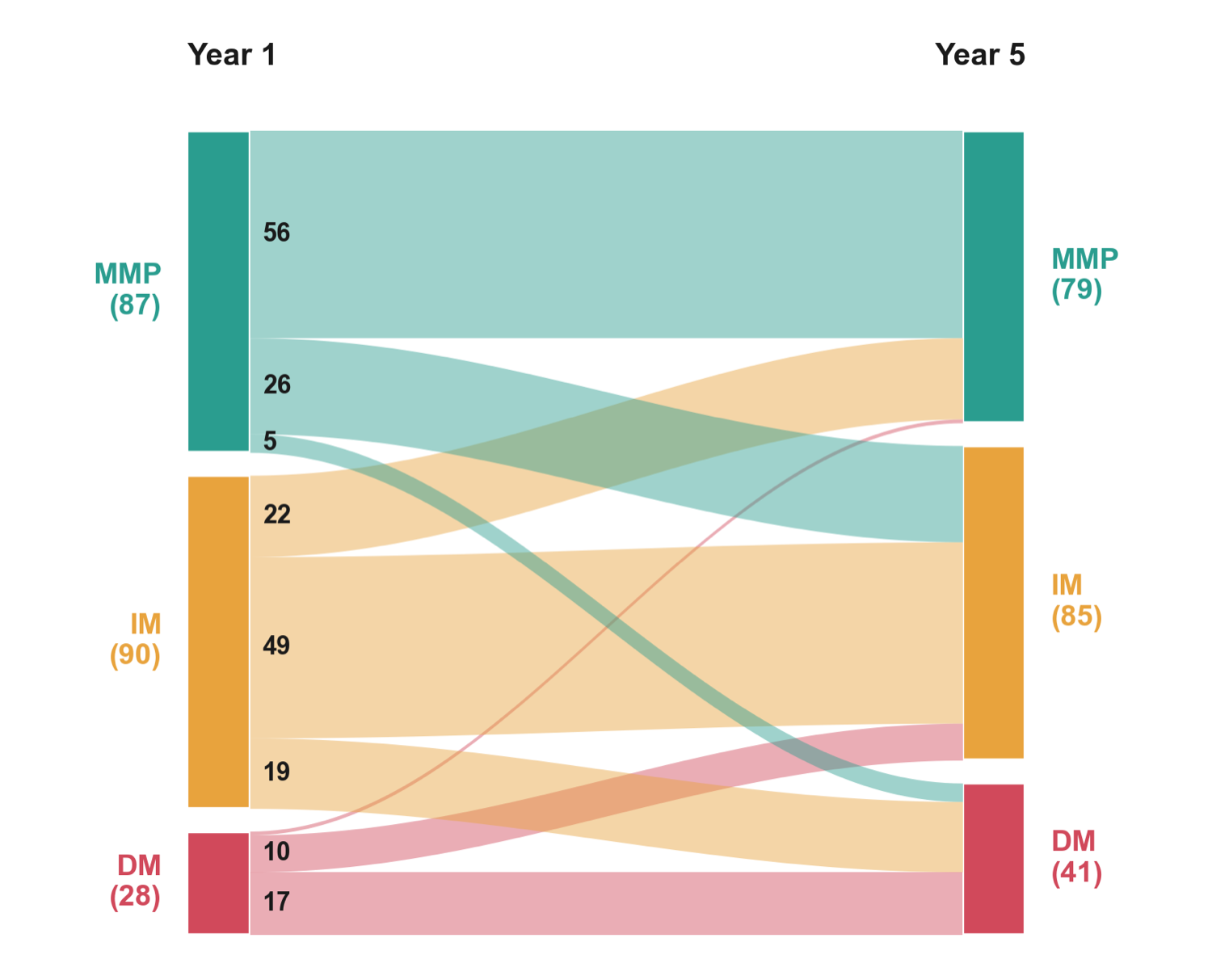
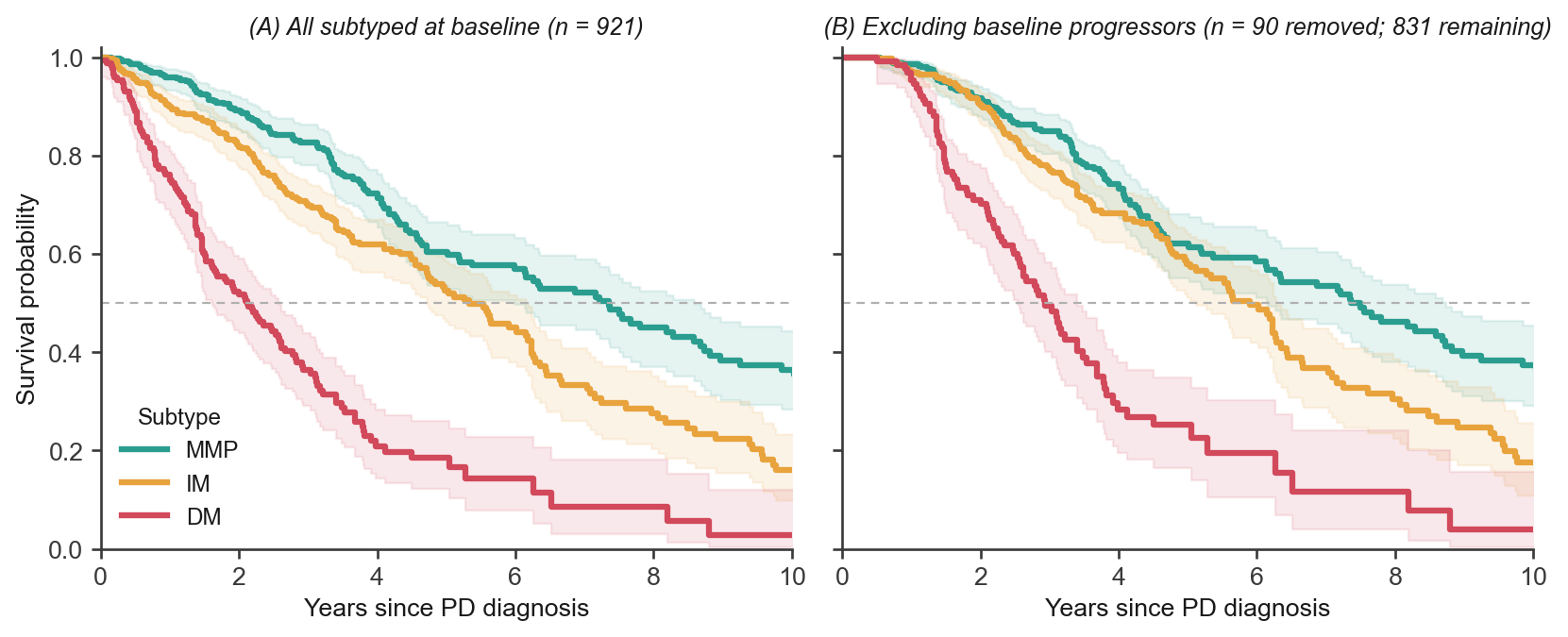
So the thresholds were rebuilt year by year. Across 1,030 de novo idiopathic PD patients from the April-2026 PPMI freeze, within-disease-year percentiles were computed for each motor and non-motor scale, so a patient is compared against peers at the same disease duration. The result is a stable, prospective classifier: subtype prevalence held steady across years, and the survival separation was decisive — DM patients progressed three times faster than MMP.
Try it: the data-driven subtyping calculator
The disease-duration percentile model ships as a free, self-contained web tool — the deployable end of the Data-driven Subtypes line. Enter a patient's disease duration and seven routine scores; it returns the subtype, a motor composite z-score, and a channel-by-channel percentile breakdown against same-disease-year peers. No data leaves your browser.
Subtypes that live in the brain, not on a clinical scale
Running in parallel to the data-driven work, this separate line asks a different question: can brain structure itself define PD subtypes that the standard clinical, pathological, and data-driven schemes all miss? The cholinergic system is the first target — with more subtypes under active study.
Does Ch4 degeneration delineate a distinct subtype of Parkinson's disease?
Mild cognitive impairment in PD (PD–MCI) is prognostically messy — some patients convert to dementia quickly, others never do — and the clinical, pathological, and data-driven frameworks don't capture which is which. This line proposes a different axis entirely: imaging-defined subtypes based on cholinergic degeneration — beginning with the nucleus basalis of Meynert (cholinergic nucleus 4, Ch4), the brain's principal source of cortical acetylcholine.
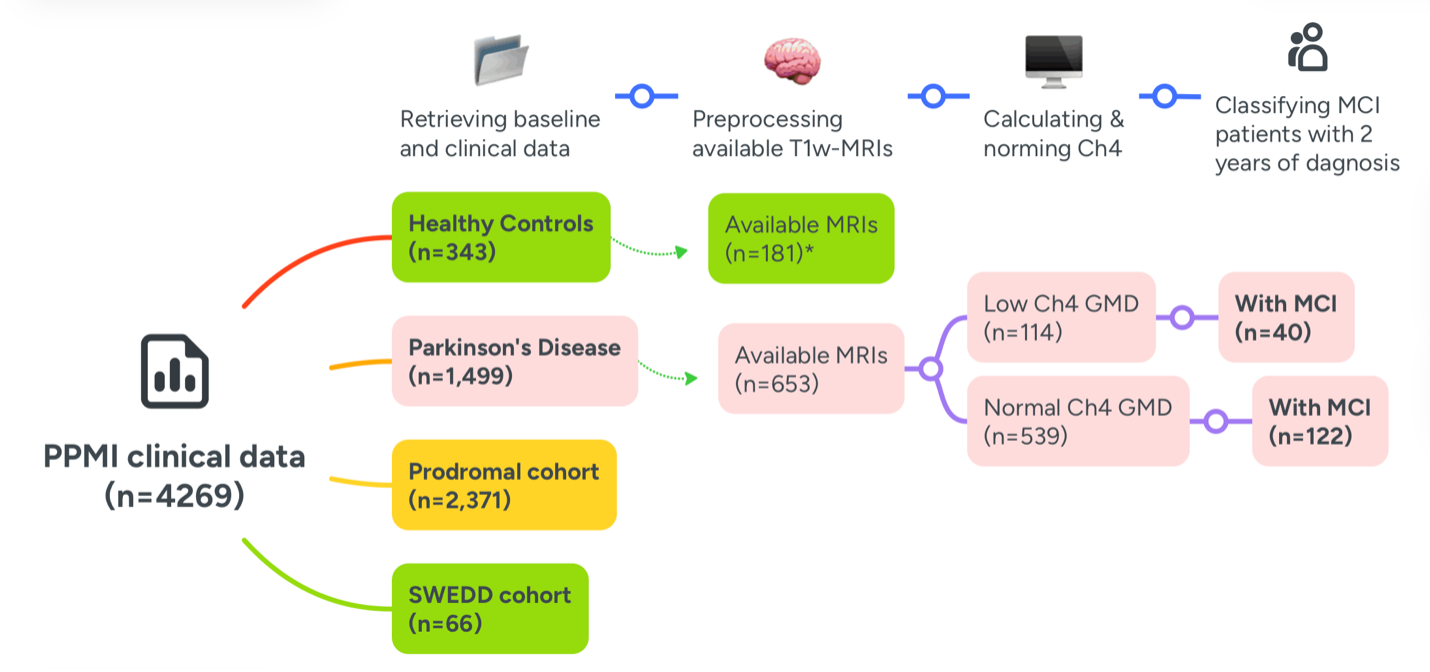
In baseline MRI from 162 PD–MCI participants in PPMI, Ch4 grey-matter density was measured with voxel-based morphometry and probabilistic maps. Patients with low Ch4 density had worse motor and autonomic burden, poorer olfaction, and — critically — progressed to cognitive-decline milestones significantly faster. The proposal: PD–MCI with Ch4 degeneration is a distinct, more malignant subtype — a candidate for enriching trials of cholinergic therapies.
Try it: the Ch4 subtyping tool
The imaging framework ships as its own interactive tool. Enter a patient's Ch4 grey-matter density with age, sex, and intracranial volume; a normative regression model returns Low vs Normal Ch4 GMD and the corresponding cholinergic subtype.
Publications
Peer-reviewed and openly citable, grouped by research line. Each links to its published record; the program is ongoing and this list continues to grow.
- Negida A, Mukhopadhyay N, Berman BD, Barrett MJ. Comparative analysis of progression milestones across Parkinson's disease clinical, pathological, and data-driven subtypes: a 10-year follow-up. npj Parkinsons Dis. 2026. doi:10.1038/s41531-026-01430-8
- Negida A, Abouelmagd ME, Hamed BM, et al. Genetic associations of Parkinson's disease clinical, pathological, and data-driven subtypes. Genes (Basel). 2026;17(4):449. doi:10.3390/genes17040449
- Negida A, Mukhopadhyay N, Berman BD, Fereshtehnejad SM, Barrett MJ. Disease-duration–specific percentiles for prospective subtyping of Parkinson's disease: a PPMI-based study. Mov Disord Clin Pract. 2026. doi:10.1002/mdc3.70740
- Negida A, Vohra HZ, Lageman SK, Mukhopadhyay N, Berman BD, Weintraub D, Barrett MJ. Parkinson's disease mild cognitive impairment with MRI evidence of cholinergic nucleus 4 degeneration: a new subtype? Parkinsonism Relat Disord. 2025;141:108072. doi:10.1016/j.parkreldis.2025.108072